Periodontics in Chicago, IL
Prevention, diagnosis and treatment of gum disease — from mild gingivitis to advanced periodontitis.
We focus on the prevention, diagnosis, and treatment of periodontal disease. Periodontics focuses on the inflammatory disease that destroys the gums and other supporting structures around the teeth.
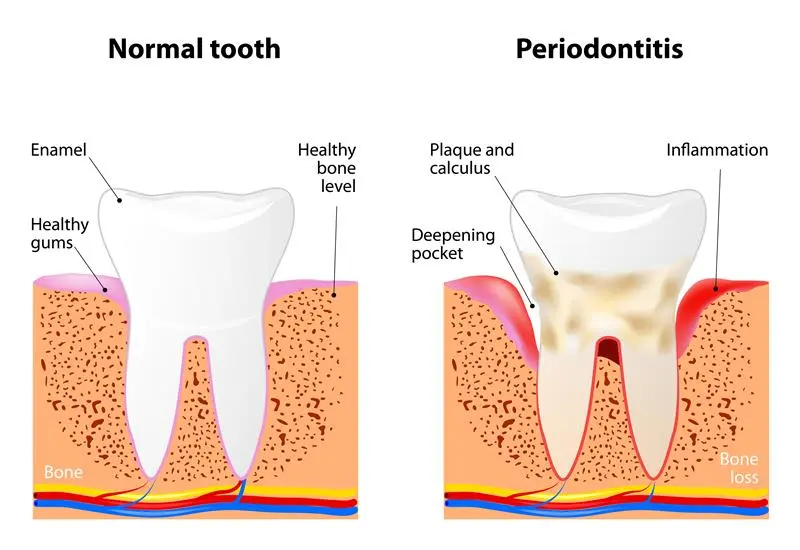
Do you know the signs of gum disease?
- Red, swollen gums
- Chronic bad breath
- Bleeding gums when you brush or floss
- Receding gums
- Loose or shifting teeth
Gum Health & Your Overall Health
Professional cleanings and other therapies can help to improve your oral health, helping you stabilize blood sugar and achieve optimum overall health. People with uncontrolled diabetes are more likely to get advanced gum disease than those whose insulin levels are regulated.
Treatments We Offer
We treat cases ranging from mild gingivitis to more severe periodontitis or periodontal disease, and offer a wide range of treatments. When needed, we provide scaling and root planing (deep cleanings; the cleaning of infected root surfaces), root surface debridement (the removal of damaged tissue), and regenerative procedures (the reversal of lost bone and tissue).
About scaling & root planingBenefits of Treating Gum Disease
Your gums and the bone beneath them hold your teeth in place. When gum disease is left alone, the infection can slowly break down those supporting tissues, which may lead to gum recession, loose teeth and, in advanced cases, tooth loss. Treating it helps protect the foundation your teeth depend on.
Gum disease is often easiest to manage when it’s found early. Gingivitis, the mildest stage, can usually be reversed with a professional cleaning and better daily care at home. Once it has progressed to periodontitis, treatment focuses on controlling the infection and helping stop further damage, so earlier care tends to mean simpler care.
What to Expect
Care starts with a gum evaluation. Your dentist or hygienist will gently measure the space between your gums and teeth, check for bleeding and recession, and review X-rays to look at the bone. This shows whether you have healthy gums, gingivitis or periodontitis.
From there, we’ll recommend a plan that fits what we find. Mild gingivitis may only need a thorough cleaning and a few changes to your home routine. More advanced gum disease often calls for scaling and root planing, sometimes followed by other therapies.
Gum disease is usually managed over time rather than fixed in a single visit. Many patients return for follow-up cleanings more often than every six months so we can keep an eye on their gums. Daily brushing, cleaning between teeth and not smoking all help your gums stay healthier between visits.
Common Questions
Can gum disease be reversed?
Gingivitis, the early stage, can often be reversed with a professional cleaning and good home care. Periodontitis usually can’t be fully reversed, but treatment can help control it and slow or stop further damage.
Is it normal for my gums to bleed when I brush?
Bleeding gums are common, but they aren’t normal. They’re often an early sign of gum inflammation. If your gums bleed regularly, it’s a good idea to schedule an exam so your dentist can check what’s going on.
What causes gum disease?
Gum disease is caused by bacteria in plaque and tartar that build up along and below the gumline. Smoking, diabetes, hormonal changes, some medications and genetics can raise your risk.
Is gum disease linked to other health problems?
Research has found links between gum disease and conditions such as diabetes, and people with uncontrolled diabetes are more likely to develop advanced gum disease. Keeping your gums healthy is one part of caring for your overall health.
Does insurance cover gum disease treatment?
Coverage depends on your plan and the treatment recommended. Our team can help you check your benefits before you begin. You can also see our insurance and payment options pages, or ask about our in-office plan if you don’t have insurance.
Terms You May Hear
- Gingivitis
- The earliest stage of gum disease, marked by red, swollen or bleeding gums. It can often be reversed with good care.
- Periodontitis
- A more advanced stage of gum disease in which the infection affects the bone and tissues that support the teeth.
- Periodontal pocket
- A space that forms between the gum and tooth when gum disease causes the gums to pull away. Deeper pockets are harder to keep clean at home.
Related Services


Noticing bleeding or tender gums?
Schedule a gum evaluation at our Chicago office so we can check your gum health and talk through your options.
After hours: 312-910-0995