
Fillings in Chicago, IL
Tooth-colored fillings that repair decay and cracks and blend in with your natural teeth.
Composite fillings act as a dentistry solution for problems such as tooth decay or cracks. A composite filling is a tooth-colored plastic and glass mixture used to restore decayed teeth. This procedure is also utilized for cosmetic improvements of the smile by fixing any discoloration or reshaping any disfigured teeth.
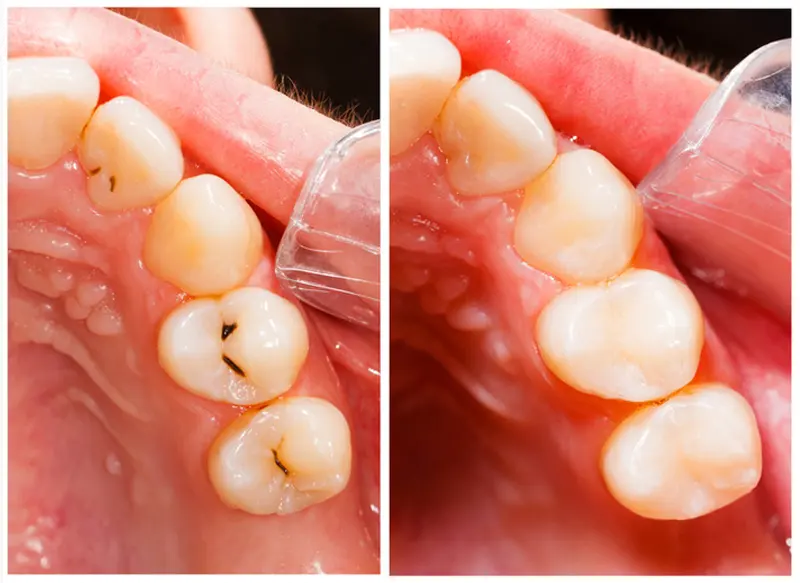
Filling treatment includes
- An exam and X-rays to find and size the cavity
- Numbing the tooth so you stay comfortable
- Removing the decayed or damaged part of the tooth
- Placing and shaping a tooth-colored filling
- Checking your bite and polishing the filling smooth
Tooth-Colored Fillings
Tooth-colored fillings are dental fillings that restore and mimic the natural appearance of tooth structure. In addition to restoring teeth that have fractured or decayed, tooth-colored fillings may also be used cosmetically to change the size, color and shape of teeth. These fillings are particularly useful in closing gaps between teeth, repairing chipped teeth and making teeth appear to be more straight or even.
Benefits of Tooth-Colored Fillings
Filling a cavity stops decay from spreading deeper into the tooth. Caught early, most cavities can be repaired with a simple filling, which helps you avoid more involved treatment like a crown or root canal down the road.
Because composite bonds directly to the tooth, your dentist can often remove less healthy tooth structure than with older filling materials. And since the material is matched to your natural shade, the filling blends in, whether it’s on a back molar or a front tooth.
Fillings are a good fit for patients of all ages. Children often need them for cavities in baby teeth or new adult teeth, and adults and seniors may need them for new decay, worn areas or older fillings that need replacing.
What to Expect
A filling is usually done in a single visit. Your dentist will numb the area, then gently remove the decay and clean the tooth. The tooth-colored material is placed in thin layers, with each layer hardened before the next is added. Once the tooth is filled, your dentist shapes and polishes the filling so it feels smooth and fits your bite.
Your lips and tongue may stay numb for a few hours, so take care not to bite your cheek or eat anything hot until feeling returns. Some people notice mild sensitivity to cold or pressure for a few days, which usually fades. If your bite feels high or uneven, call us and we can make a quick adjustment.
To prevent new cavities, brush with fluoride toothpaste, floss daily and limit sugary snacks and drinks.
Common Questions
How do I know if I need a filling?
Early cavities often don’t cause any symptoms, which is why regular exams and X-rays matter. As decay grows, you may notice sensitivity to sweets, hot or cold, a rough spot or a small hole. Your dentist will let you know if a filling is needed.
Does getting a filling hurt?
Your dentist numbs the tooth first, so most people feel little more than some pressure and vibration. Mild sensitivity afterward is common and usually goes away within a few days.
How long do tooth-colored fillings last?
It depends on the size of the filling, where it is and your habits, like grinding or chewing ice. As a general guide, many composite fillings last several years or more with good care.
Can I replace my old silver fillings with tooth-colored ones?
In many cases, yes. Your dentist will look at the condition of your existing fillings and talk with you about whether replacing them makes sense. Fillings that are worn, cracked or leaking are often good candidates.
Does insurance cover fillings?
Coverage depends on your plan. Our team can help you check your benefits before treatment. You can also visit our insurance and payment options pages, or ask about our in-office plan if you don’t have insurance.
Terms You May Hear
- Composite resin
- The tooth-colored material used in fillings, made from a mix of plastic and fine glass particles.
- Cavity
- An area of a tooth that has been damaged by decay, creating a small hole or soft spot.
- Bonding
- The process of attaching composite material to the tooth so it holds firmly in place.
Related Services


Think you might have a cavity?
Call our Chicago office to schedule an exam and we’ll check it out.
After hours: 312-910-0995